

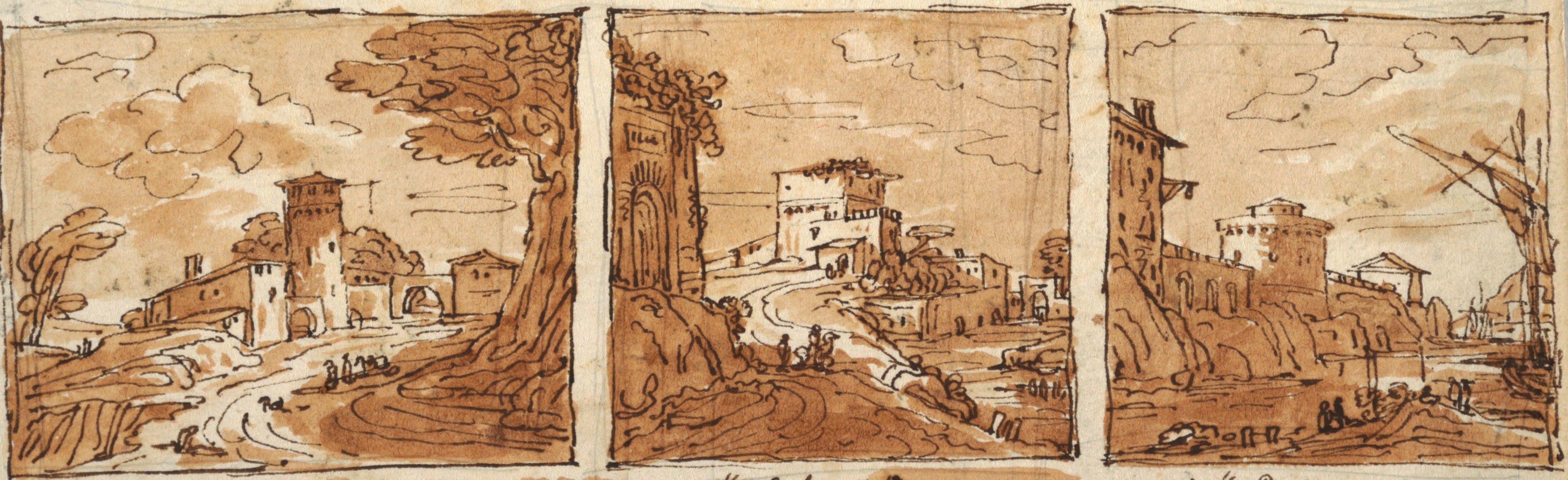
The notebook on Adaeze’s worktable had been through three countries and was showing it. The cover was soft from handling — she had developed the habit of running her thumb across it when she was thinking, which she did often enough that a patch of leather had been worn to a shine.
The early pages were dense with observations from home: dye sources, mordant ratios, sketches of patterns in the margins, notes about tension and thread count. The sea crossing to Ardenia had yielded little, on account of the seasickness. Six months in Altina, the Ardenian capital, were represented in hurried sketches and trade negotiation notes. The road north to Velleia had inspired landscapes rendered in colors rather than words.
Now, Velleia itself had been accumulating pages at a rate that was beginning to concern her, because she had brought only the one notebook and there were five months remaining in their six-month visit.
She was not concerned enough to write less.
Amadou sat arched over the other worktable like a reed, sorting beads of wood, shell and bone into gradients — deep red shifting through orange through yellow, a separate row of blues moving from pale to near-black — and cross-referencing them against a chart in his own notebook, which was smaller than hers and considerably neater. He worked without haste, as though time were simply the medium in which the work happened rather than a constraint upon it.
“You are going out,” he said.
“Ehn,” she affirmed, “to a dyehouse by the river. Signore Damiano is escorting me.” She was already checking her bag — notebook, two spare pens, the small brass case of reference samples she carried everywhere, coins. “I am behind. I should have arranged this a week ago.”
Amadou set down the bead he was holding and looked at her with mild consideration.
“You have five months, cousin.”
“I have five months and a report due to the ambassador at the end of each one,” she said.
He looked back at his beads. “Stop by the river market on the way back, abeg—see if they have that yellow thread in a heavier weight.”
She added it to her mental list. She was almost to the door when he stopped her.
“Ada.”
She turned.
“If you are going with Damiano, you will only see what they allow you to see.”
“Ehn, cousin,” she said. “I know.”
Signore Damiano did not hurry.
He spoke as they went, one hand occasionally lifting to indicate a building, a street, or a point of civic pride that she was expected to note.
The smell arrived first — sharp and slightly fermented, the sign of a vat in use. Under it, fainter, was a sweetness like cut grass.
“This quarter,” Damiano said as they turned toward the river, “has housed dyers for longer than the present guild charters.”
“I see,” she said, because she did.
The indicated street was narrow, the buildings old and close, their lower floors showing the permanent staining of decades of work — blues and greens worked into the stone at the base of the walls, the kind of marks that outlasted any individual dyer’s practice and became instead a record of the street’s long occupation.
She had seen streets like this at home, in the dyeing quarter near the delta, where the water ran colors that changed with the season. Different colors here. Different river. The same principle: a place that had given itself to a specific kind of work and could not now be unstained.
“The city prefers them here,” Damiano added lightly. “Downstream.”
When they reached the dyehouse in question, he did not knock.
“Salvi!” he called, stepping into the open doorway, and Adaeze followed in his wake.
The heat struck her a moment later. It settled along her skin, damp at the back of her neck, catching at the inside of her wrists. The air held the smell of wool, wet and faintly animal, and beneath it something sourer, the life of the vat.
There were three men inside.
The man who looked up was perhaps fifty, compact, his forearms stained to the elbow in overlapping colors the way a dyer’s arms always were — a palimpsest of previous work, blue beneath green beneath something rust-brown, years of experience written on his skin. He stood at the primary vat, a length of undyed wool suspended above its surface.
Another man, younger, worked a second vat with a long paddle. He did not stop when they entered, but the rhythm altered — a fraction slower, a fraction more aware.
At the back, a third hauled wet cloth from a rinse basin, water streaming from it in steady lines that struck the stone floor with a sound that did not cease.
No one had ever mistaken a working dyehouse for a quiet place.
“Signore Damiano,” said the man at the vat.
“Signore Salvi,” said Damiano. “This is Envoy Adaeze Okafor of the Malendan delegation. She is here, as discussed.”
Salvi looked at her with direct assessment, his gaze catching on her features, her dark skin, the wrap at her head. His mustache twitched. It was impressively lush, as though all of the hair had migrated from his bald head to his upper lip.
“What do you want?”
Signore Damiano stiffened, but Adaeze held up a hand.
“To learn something,” she said. “And to offer something in exchange.”
“Five minutes,” Salvi said.
Adaeze stepped further into the room, and Damiano stepped back.
The air settled more firmly against her now. The edge of her notebook softened slightly beneath her thumb. A line of water crept across the floor toward her sandal and then stopped.
Salvi set the wool aside at last, but did not move far from the vat.
Adaeze opened the case on the worktable he indicated — a surface worn smooth with years of use, stained in the corners with colors that had not entirely come out. She shifted slightly as the man from the rinse basin passed behind her, the cloth on his shoulder dripping close enough that she could feel the wet against the back of her arm.
She laid out three swatches.
She started with the onion skin.
“Very common at home; every household uses it. It produces this red-gold alone when we want something quick, or in combination when we want to push a color warmer without rebuilding the whole bath.”
She moved to the second.
“This is kurkum: not a plant of our region, it comes through the eastern trade. I saw it in a spice market in Altina… I believe you call it turmeric? It produces a golden yellow that is clear and vivid, but it sits on the surface of fabric and is less stable.”
The paddle slowed in the secondary vat, the younger man craning his neck to look.
Finally: “This one has many names: elu, nila. It is an indigo, a different species from what you may have seen from the Far East. The vat preparation is fermentation, longer and more volatile, but the color sits deep and holds. This one I prepared myself.”
He had not touched any of them yet, but he was looking.
“Some of these,” she offered, “may become easier to obtain here. The trade agreement the delegation is negotiating includes botanical and material exchange.”
The mustache twitched. He glanced at Damiano, then back at the samples. Slowly, thoroughly, he wiped his hands.
His hand went to the indigo swatch.
He lifted it without asking and held it to the light from the door. He turned it once. Twice.
“You made this,” he said.
“Yes.”
“The color is very even.” He looked at her over the cloth.
“Thank you,” she said. “It takes more than one dip to make it agree with itself.”
His eyes narrowed. He set the swatch down.
“Where do you use the onion skin?” Salvi asked.
“As a convenience,” she said. “Under elu—indigo—sometimes, to change its mood. But not for anything that must last.”
The mustache twitched. The man at the back had stopped pretending not to watch.
“What do you use for yellow here?” she asked.
“Weld. Local plant.”
“… And for blue?”
“Woad.”
“May I see?”
He did not answer. Instead, he turned back to the vat, adjusted the wool, pressed it beneath the surface, then drew it out again.
He did not invite her in, but he glanced toward the deeper part of the workshop and did not block her view.
She stepped just far enough to see — and the yellow caught her.
“Ah-ah,” she breathed in surprise. “It is cooler than I expected. Greener.” She turned to him, considering. “The weld-dyed cloth in Altina read… warmer, more golden.”
“Hmph.” A pause. “This is local weld.”
She wrote that down. The page resisted slightly, damp.
She did not ask about the madder. It was on the rack, warm and red, and she had seen it, but she was not going to look too interested in things he hadn’t shown her.
She stepped back, the drying racks now neatly out of sight.
“The layering,” she said. “I have been told it is weld first, then woad. That what it produces is a green—a color of its own.”
He looked at her sharply. Then at Damiano, near the doorway.
“Who told you that?” The question had an edge.
“A guild master, at a gathering. In passing.”
His jaw shifted. “In passing.”
“He did not say more than that.”
Salvi looked at the rack. She let the silence sit.
“I would like to learn more,” she said.
The mustache twitched.
“I could bring osun chips,” she said. “It is a redwood. We use it at home on cotton and on raffia—palm fiber. I am less familiar with it on wool. You could tell me whether it is worth the attempt. And I could… show you what we do—to bind it with cotton.”
Salvi looked at the elu swatch still on his worktable. He had not returned it to the case.
The younger worker had resumed his stirring, but without rhythm now. Listening.
Salvi wiped his hands on the cloth at his belt and stepped away from the vat. He looked at her hands then — at the notebook, at the pen, at her fingers. He reached across without asking and took her left hand, turning it palm up. She let him, curious. He looked at the underside of her fingers: pale against her dark skin, unstained.
“You’re not a dyer,” he said.
“I am a weaver,” she said. “With some dye experience and a thorough appreciation for what dyers do.”
“Hm.” He released her hand. Looked at the notebook. Then at the sample case, still open on his worktable.
“If you come again,” he said, “you bring the chips.”
“Yes.”
“And you tell me what you are writing in your book.”
“... Yes.”
He glanced once more toward Damiano, who had not moved from the doorway, observing with polite neutrality.
“Without him,” he said.
Damiano made a small sound. Adaeze did not look at him.
“When?” she said.
“When the vats are being cleaned. A week, maybe ten days, toward sunset.” He picked up the elu swatch and held it to the light one more time, and then set it back down. “There is nothing to see in a clean shop.” He looked at her. “We can talk.”
Adaeze inclined her head.
She collected her swatches, closed the case, and did not look at the drying rack again on her way out.
Outside, the air was sharp after the dyehouse heat. Damiano fell into step beside her.
“He was not particularly—” he began.
“He was fine,” she said.
“The guild instructed him to—”
“Signore Damiano, his conditions are reasonable.” She glanced at him. “The next visit I will go alone.”
A pause.
“The protocol for unaccompanied—”
“I will note it in my report,” she said, “that the nature of the exchange requires some independence of movement. The ambassador will understand.”
Damiano received this in silence. She suspected he would write his own note. That was fine. That was his job, as this was hers.
When Adaeze returned to the palazzo, Amadou was where she had left him — or nearly. The bead chart had been put away and a different notebook was open now, his pen moving in the languid way it always moved. He did not look up when she came in.
“Your day was productive,” he said.
“Ehen.” She set her bag down, pulled out her notebook, set it on the worktable. “I am allowed back. Without Damiano.”
Amadou exhaled through his nose — a laugh — then turned a page.
“I got your thread,” she said.
He looked up.
She produced the wrapped parcel from her bag and set it beside his notebook. He opened it without ceremony, held each skein to the light in turn, ran his thumb along the twist of one.
“Good,” he said, with the satisfaction of a man whose instincts had been vindicated.
She sat down at her own worktable and opened her notebook to the newest page, the ink slightly smudged where she’d written too fast. She read through what she’d written while it was still fresh, adding questions in the margins, the notation filling in around the edges.
She was going to need a new notebook before the month was out.
Chapter Twelve

The Merchant Guild’s great hall was a functional room — high-ceilinged for ventilation, wide-floored for commerce. Its proportions were designed for the movement of goods and people and the negotiations that accompanied both rather than for any aesthetic purpose.
Chapter Change Log
Added the names of the country, capital, and city (Ardenia, Altina, and Velleia, respectively)
Image
Felice Giani, View of the Palazzo Barberini; Six Landscapes by Vincenzo Martinelli; Sixteenth Century Capitals, Bologna, 1809–1910 (public domain)