
Chapter One
or, A Most Considered Anniversary

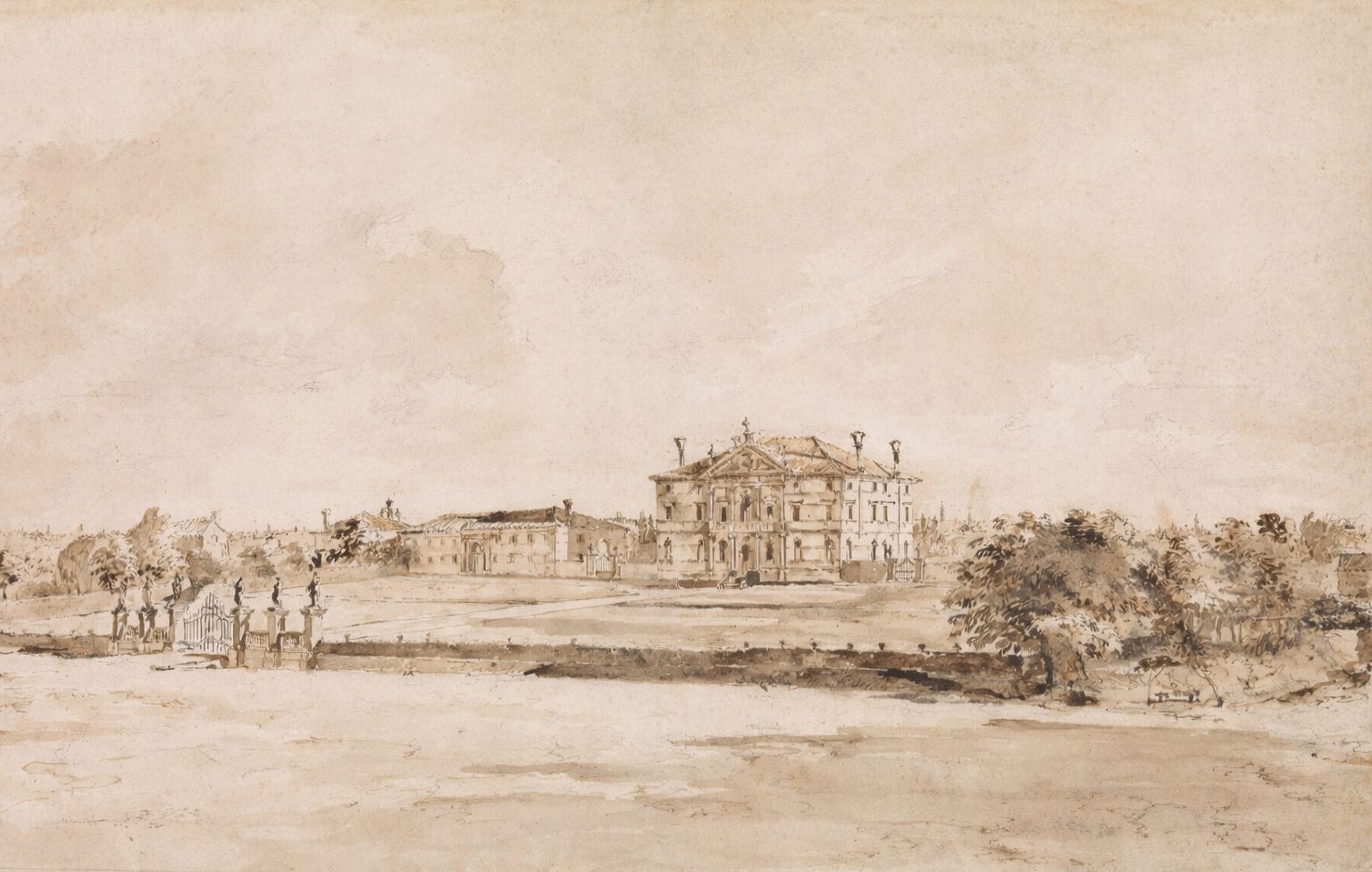
For the past five years, the Seventeenth of Thawing had been observed with particular care by the staff of Villa Casorio.
No one spoke of it openly, yet voices remained lower than usual in the corridors, doors were closed more softly, and errands that might normally have waited until afternoon were completed early.
It was, on its face, an odd mood for the wedding anniversary of the masters of the house.
Petra, the youngest and newest member of the household staff, had been at the villa for eight months and still found much of it remarkable. The strange quiet of the day was among the most remarkable things of all.
She had noticed it early that morning: maids pausing in doorways before knocking, Cook checking the clock more often than the stove. Whenever she drifted close enough, the conversation around her faded away with suspicious alacrity.
She wanted desperately to ask something.
She had the sense to ask nothing.
By afternoon she found herself hurrying down the corridor toward the laundry, propelled by anxious energy.
She pushed through the door.
“He asked for the Ardovian,” Petra announced, breathless.
Signora Sera did not look up. The head housekeeper continued pressing the linen before her, guiding the iron slowly along a crease.
“That time already,” the Signora said to herself, and then, to Petra: “The Ardovian is in the locked cabinet. Fetch two glasses for the tray.”
Petra blinked. “The Contessa doesn’t drink whiskey.”
The Signora looked up.
“Two glasses on the tray, Petra.”
Petra placed two glasses on the tray.
Matteo, who managed the grounds and spoke his opinions only to his roses, had worked at grander estates than Villa Casorio.
He had spent twelve years at the nearby Orvetti estate, which was expansive and well-manicured and considered itself the most impressive in the territory — and the Orvetti family, whose home featured more columns than anyone reasonably needed, was very proud of this.
But Villa Orvetti, for all its columns, did not have what Villa Casorio had: a rear garden that opened like an embrace; at its heart, a pergola so thoroughly claimed by an ancient wisteria vine that it was no longer entirely clear which one had been built around the other; a fountain on the veranda with a distinct matronly quality — tutting or chortling depending on the direction of the wind.
Matteo was coaxing the fountain from winter dormancy when Varo Bellandi crossed from the east wing to the main house.
Varo was the Conte’s secretary and, in Matteo’s private assessment, a man who noticed considerably more than he acknowledged and acknowledged considerably less than he knew.
“Anniversary,” Matteo said as Varo passed.
“Annual review,” Varo said with a nod, not stopping.
Matteo looked at the fountain. It gurgled noncommittally.
Varo passed the library, whose shelves had been reorganized twice in recent years (first by subject, then by frequency of use in a system so sensible it bordered on aggressive). In the study, the accounts ledger sat on the Contessa’s desk with quiet confidence. He glanced at it briefly before unlocking the lower left drawer and lifting the contract from its velvet-lined recesses.
It was a neat document: leather-bound and concise. It had never needed to be thick, having been written by two people who said what they meant and meant what they said.
Varo adjusted his glasses. He left the study with contract in hand and composure intact.
The southwest sitting room was, by general consensus of the villa’s staff, the best room in the house. This was not because it was the largest or the most formally appointed. (The reception hall held that distinction.) The southwest sitting room was the best room because it had two good chairs positioned at an angle that suggested conversation rather than performance, and a fireplace that actually drew properly, and windows that caught the last of the evening light in a way that made everything look faintly like a painting of itself.
It was also, though no one had said this aloud, the room where the Conte and Contessa were most themselves — just two people who often decided to be in the same room and found this arrangement satisfactory.
The Signora set the tray on the low table between the chairs. Ardovian whiskey, decanted, with two glasses.
The Signora had worked for four households before this one. She had opinions about all of them. She had more opinions about this one than all the others combined, and she kept every single one of them behind her teeth with the grip of a woman who understood that some things were not her business and also that some things were absolutely her business. The trick was knowing which was which.
She stoked the fire and left the room.
In the corridor she passed Varo, carrying the contract.
The Signora looked at the contract. Varo looked at the Signora.
Neither of them said a thing. She went back to the laundry. He went into the sitting room, set the contract on the table beside the whiskey and the two glasses, and left without rearranging anything.
The Conte and Contessa arrived at the southwest sitting room door at approximately the same moment, which had also happened last year, and the year before that, and which Petra — who was dusting a windowsill down the hall with a total lack of subtlety available only to the very young — found terribly romantic.
“You look well,” said the Conte.
“You look sunburned,” said the Contessa.
“I was in the east fields.”
The Contessa’s lips curved into a small smile. “Of course.”
“The irrigation situation—”
“I looked into it. Did you see my memorandum?”
“I was going to read it tonight. After the review.”
“Mm,” said the Contessa, and walked into the sitting room.
The Conte followed.
The door did not close fully — old houses, old latches. Waning daylight painted the scene in gold: the contract sitting on the low table between two people who had, over the course of their marriage, learned each other well enough to know that whatever was going to be said tonight had probably already been decided.
The Conte poured two glasses of the Ardovian.
The Contessa opened the contract to the first page.
“Shall we begin?”
Just outside, Petra slipped away with a giddy smile, absolutely certain she had just witnessed a pivotal event in a great love story.
She was, in a manner of speaking, not entirely wrong.
Chapter Two

“Item one,” said the Contessa, settling into an administrative flow. “Establishment and maintenance of a functioning noble household meeting the land grant requirements—” She glanced up. “We can take this as read.”
“We can take most of it as read,” said the Conte.
Image
Francesco Guardi, The Villa Loredan, near Treviso, c. 1778 (public domain)
Oh man, I'm a sucker for diplomatic formality! Can't wait to read more.
It is really great piece, it sets a stage perfectly for something. It also clearly defines roles of people in the manor, and I have a feeling someone will be overstepping and get their nose in something dirty. Great read.