
Chapter Four
or, From Aspirations to Arrival

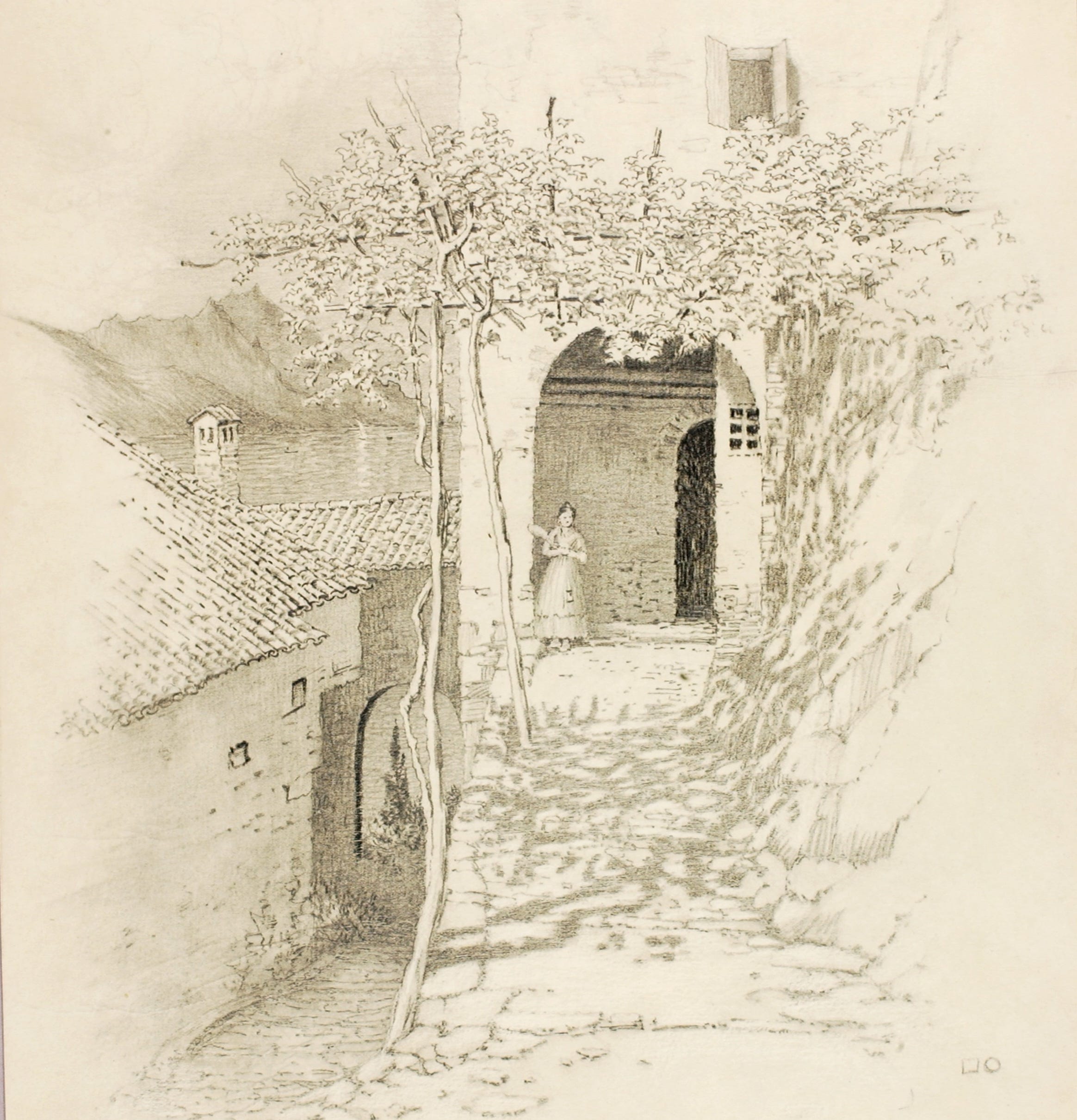
The townhouse on Via Serrano had been built by someone who understood light. The main receiving room caught the morning on its eastern face and released it slowly westward through the afternoon. The study, north-facing, had the cool steady light of a room that knew what it was for. The courtyard opened upward like a cupped hand.
These things had been here long before the Arvetti family (no relation to the Orvetti family, a distinction the Orvettis felt necessary to raise at regular intervals), who had lived in the house for eleven years and left behind evidence of good taste and poor execution in approximately equal measure.
The good taste was visible in the choices — the proportions of the doorframes, the selection of stone for the courtyard basin, the kitchen's generous workspace that someone had recognized as worth preserving (the new pipework routed around it rather than through it).
The poor execution was visible in everything else. A wallcovering in the second bedroom chosen with confidence that had not survived the test of existing in a room. Ceiling molding in the receiving room that had begun as an homage to something classical and arrived at something merely busy.
Vessa noted these things in her mental ledger, moving through the rooms with the methodical attention she brought to any new acquisition.
Varo followed at the appropriate distance, document case under one arm, making his own notes when she indicated something requiring follow-up, silent when she didn’t.
The courtyard was south-facing and had, at its center, a stone basin that had at some point been a fountain and was now a planter containing the desiccated remains of something once-optimistic.
Vessa crouched beside it, her skirts pooling on the patio stone.
The basin itself was sound — solid stone, no cracks, the drainage channel intact. Whatever had been planted in it had simply not been attended to.
She tried to think what she would put here. Something that didn’t require too much maintenance, because she was going to be busy and she was realistic about her own limitations. Something that would come back year after year without being asked. Something reliable.
Matteo would know.
“The basin,” she said, a fragment of a thought.
“I’ll note it,” said Varo, completing her thought without pause.
She looked at the courtyard walls — old stone, warm-colored, the kind of surface that held heat in the afternoon.
A table would go well against the south wall. Two chairs. Nothing elaborate. She had sat in the southwest sitting room of Villa Casorio for five years and never once thought about who had arranged the chairs. They had simply been there. These chairs would be positioned in just that way.
The study was the best room.
She stood in it for a moment longer than the others, turning slowly, taking inventory. North-facing, which meant cool and consistent light — good for working, hard on the spirit in winter. Deep windowsill. Original floor in good condition, dark wood, worn near the door from generations of feet. Shelving on three walls — good shelving, all at the wrong height.
“The shelving,” said Vessa.
“I’ll find a carpenter,” said Varo.
She looked at the wall opposite the window. Blank. Previous tenants had hung something there. She could see the ghost of it, the slightly different tone of the plaster where something had kept the light off for years.
She didn’t know yet what she would put there. That was fine. She had time.
“Previous lease terms?” she asked.
The rustle of documents. “Standard residential. Renewed twice. No significant disputes on record. The family relocated to the coast.”
“The wallcovering in the second bedroom.” A pause. “It’ll need to come down before I move in.”
Varo noted this.
She moved to the window. Via Serrano beyond was quiet but alive — a flower cart, two women with market baskets, a boy running somewhere with the focused urgency of someone who had been sent on an errand and was taking it seriously. Normal street. Normal life. She had walked past this house a hundred times without thinking about it.
She thought about it now.
“The front reception room,” she said finally. “The proportions are good but it reads as formal. I don’t want formal.”
“The furniture arrangement?”
“Partly. Also the ceiling molding is very—” She made a gesture indicating excessive ornamentation.
“The Arvetti family had aspirations,” said Varo.
It was so precisely, dryly correct that she looked at him.
He was looking at the shelving with the expression he wore when he had said something and was declining to acknowledge having said it.
She suppressed a smile.
“Indeed,” she said. “Note that the molding needs assessment. I want to know if it can be simplified or removed without damaging the ceiling.”
“Yes, my lady.”
By mid-afternoon the rooms had sorted themselves in her mind into what they were and what they would become.
The study would be hers, of course — shelving repositioned, the blank wall still undecided. The kitchen was already good and would be better. The second bedroom would lose the wallcovering and become a guest room. The third bedroom would be something else; she wasn’t sure what yet. She had not had a spare room before. The concept required consideration.
The receiving room would not be formal.
The courtyard would have something reliable in the basin, and a table against the south wall, and two chairs at an angle she would not dwell on.
She stood in the courtyard in the afternoon light with Varo’s final notes of the day in her hand and looked at the strip of sky above the roofline, very blue, the blue of late afternoon before it started thinking about evening.
It was a good house.
It would be hers in a way Villa Casorio, for all that she had built it into something, had never quite been.
She had known this going in, had structured the whole arrangement around knowing it, had been sensible and clear-eyed and correct.
Still, she found her arms wrapped loosely around herself — and left them there.
The courtyard was very quiet.
“Varo,” she said.
He appeared from the interior with the promptness of someone who had been nearby without making himself a presence. “My lady.”
She handed him the notes. “Tomorrow morning. The carpenter first.”
“Yes, my lady.”
She looked at the basin one more time. At the dead thing in it that she was going to replace with something reliable.
“That’ll be all for today,” she said.
He collected the document case. Moved toward the interior and the front door beyond it.
“Varo.”
He stopped.
She had nothing to say. She had called his name anyway.
Her arms were wrapped around herself again.
He waited. He was good at this — the stillness, the space. It felt different here.
“Thank you,” she said. “For today.”
A brief pause.
“Of course, my lady,” he said.
He left.
She stayed in the courtyard a while longer, in the afternoon light, in the quiet.
It was a good house. On a good street. Hers.
Chapter Five

Five days later, Niccolo Selvano arrived.
He did not write ahead. He did not send word. He arrived in the early afternoon with two bags, a friend nobody had invited, and a great deal of energy.
Image
George Elbert Burr, Untitled (transfer drawing for Village Street, Lake Lugano Italy [no. 1]), c. 1923 (public domain)